I’ve always been intrigued by the simple yet revolutionary act of making my own plant-based yogurt. It’s a sustainable choice that aligns with a vegan lifestyle, tapping into the age-old tradition of fermenting foods for both preservation and health. Vegan yogurt makers have made this process accessible to everyone, allowing for the production of nutritious and delicious yogurt without the use of animal products.
Making vegan yogurt at home requires a reliable yogurt maker that can maintain the precise, stable temperatures necessary for fermentation. It’s a straightforward process: you mix your chosen vegan milk with a yogurt culture, then let your machine work its magic. There’s a delightful element of personalization, too—I can experiment with different plant milks and cultures to find the perfect taste and texture just for me.
After investing time in researching and trying out various yogurt makers, I’m ready to share those that stand out for their quality, dependability, and user experience.
Best Vegan Yogurt Makers
Whether you’re into almond, soy, coconut, or any other non-dairy milk, these yogurt makers got you covered. Let’s dive into my top picks that make the yogurt-making process a breeze for us plant-based folks.
Cozy Steel Yogurt Maker
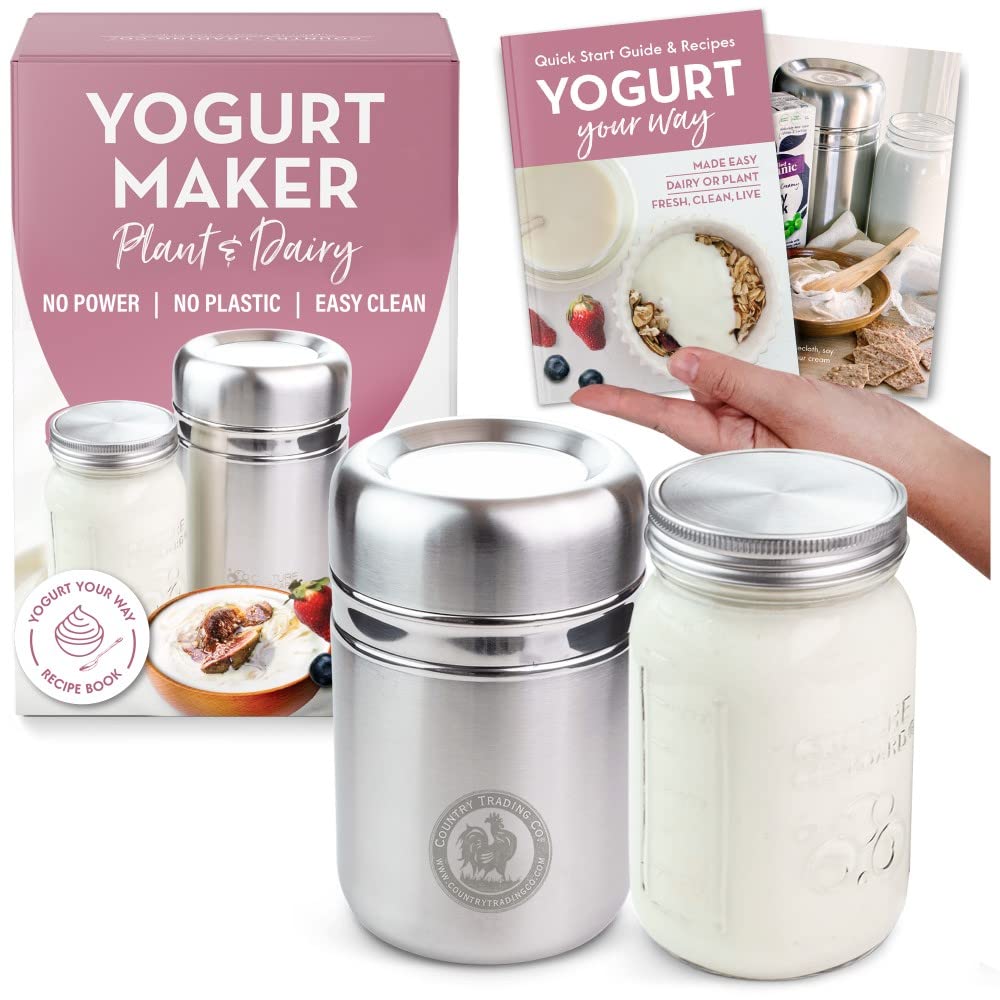
If you’re seeking a hassle-free and eco-friendly way to craft your own vegan yogurt at home, this is a treasure worth considering.
Pros
- Creates a rich and creamy yogurt without reliance on electricity
- Comes with a comprehensive guide packed with varied recipes
- Eco-conscious choice with its plastic-free design
Cons
- The glass jar doesn’t accommodate a full quart of milk
- Manual process may not appeal to everyone
- Lacks the convenience of an automatic timer
My latest kitchen experiment with the Cozy Steel Yogurt Maker has left me impressed. The self-reliant process, not dependent on electricity, fits seamlessly into my eco-friendly routine. Admittedly, I was used to the set-and-forget method of my old electric maker, but there’s a unique satisfaction found in the manual approach this kit offers.
The recipe book that comes with it is a genuine goldmine, offering more than a bland manual. It’s been educating and inspiring, allowing me to explore beyond my usual almond milk-based yogurts into realms of coconut and oat delights. I admire the fact that it’s not just a product but a gateway to expanding one’s culinary horizons, particularly for vegan diets where options can sometimes feel limited.
Despite its charm, it’s not without minor setbacks. The jar’s capacity doesn’t quite hit the mark for a full quart, a snippet I learned the practical way. And, while I’m rallying behind the lack of plastic, I can’t help but miss the convenience of an automatic timer. Yet, these are small trade-offs for the overall experience – crafting fresh, preservative-free yogurt that I tailor to my personal tastes and nutritional goals.
Keolia Yogurt Maker
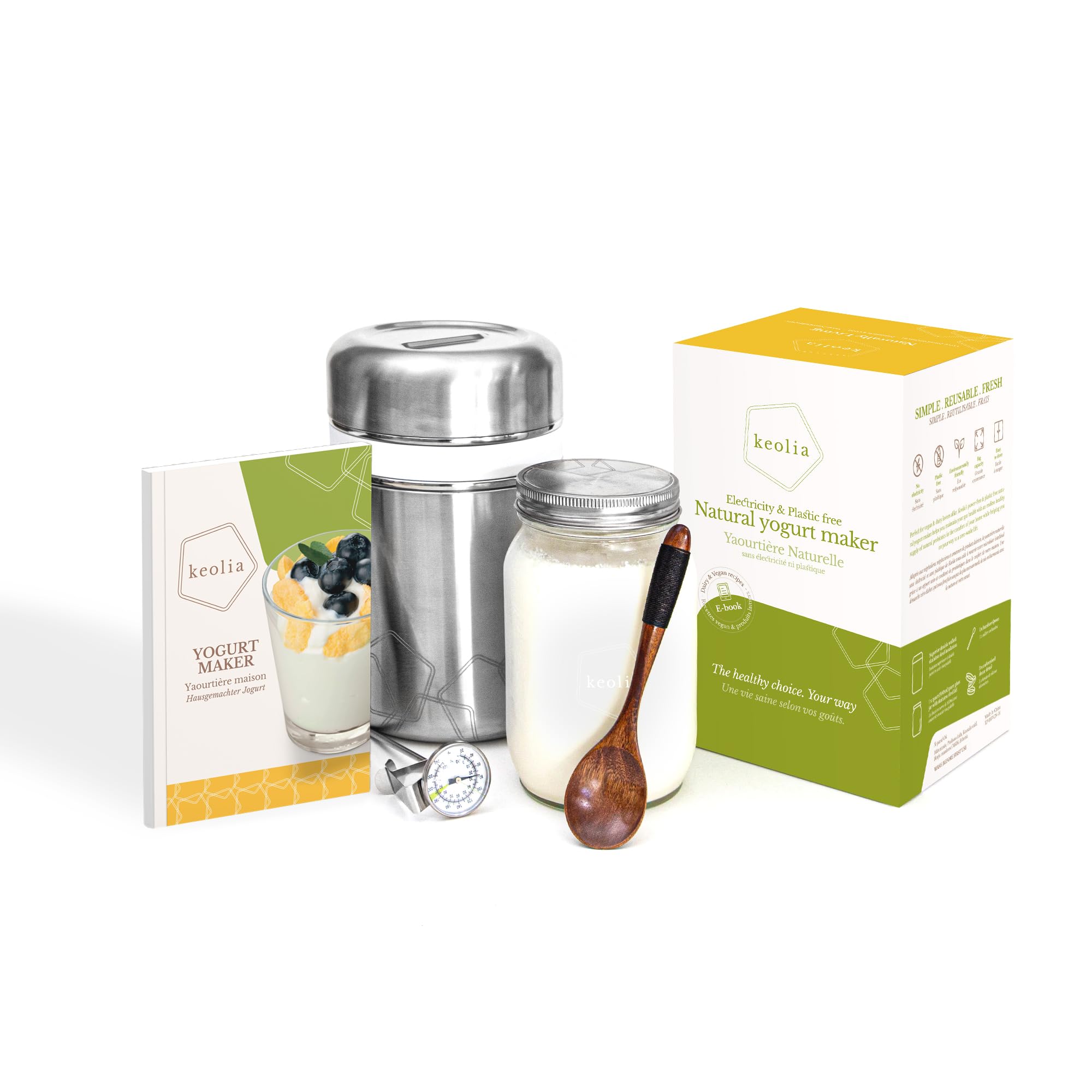
I recently got my hands on the Keolia Yogurt Maker, and I’ve found it to be a fantastic addition to my kitchen for making my own vegan yogurt.
Pros
- Sustainable and electricity-free operation
- Inclusive of all diets, especially great for vegan use
- Stylish and compact design for easy storage
Cons
- Initial recipe setup could be a bit tricky for beginners
- Entirely manual, which might not suit everyone
- Single quart capacity may not suffice for larger families
I was searching for a sustainable way to craft my own vegan yogurt and stumbled upon this nifty appliance. Not only does it look sleek on my countertop, but it also feels sturdy and well-made. Preparing my coconut milk yogurt was a breeze once I got the hang of using the thermometer to monitor the fermentation process. As an advocate for sustainable living, I appreciate that it operates sans electricity.
Surprisingly, it fits perfectly among my other kitchen gadgets and doesn’t take up much space. The glass jars ensure my vegan creations are free from unwanted plastic contact, and cleaning them was straightforward. Given how frequently I’m looking to include probiotics in my diet, I found the routine of making yogurt with this machine quite meditative and fulfilling.
However, I wish it came with a larger capacity. While sufficient for my solo use, I can foresee needing multiple batches for family or friends. Also, it requires some patience and precision, which may deter those looking for a more automated experience. But overall, I think fellow vegans will find the Keolia Yogurt Maker to be a valuable tool for our plant-based culinary adventures.
Euro Cuisine Easy Yogurt
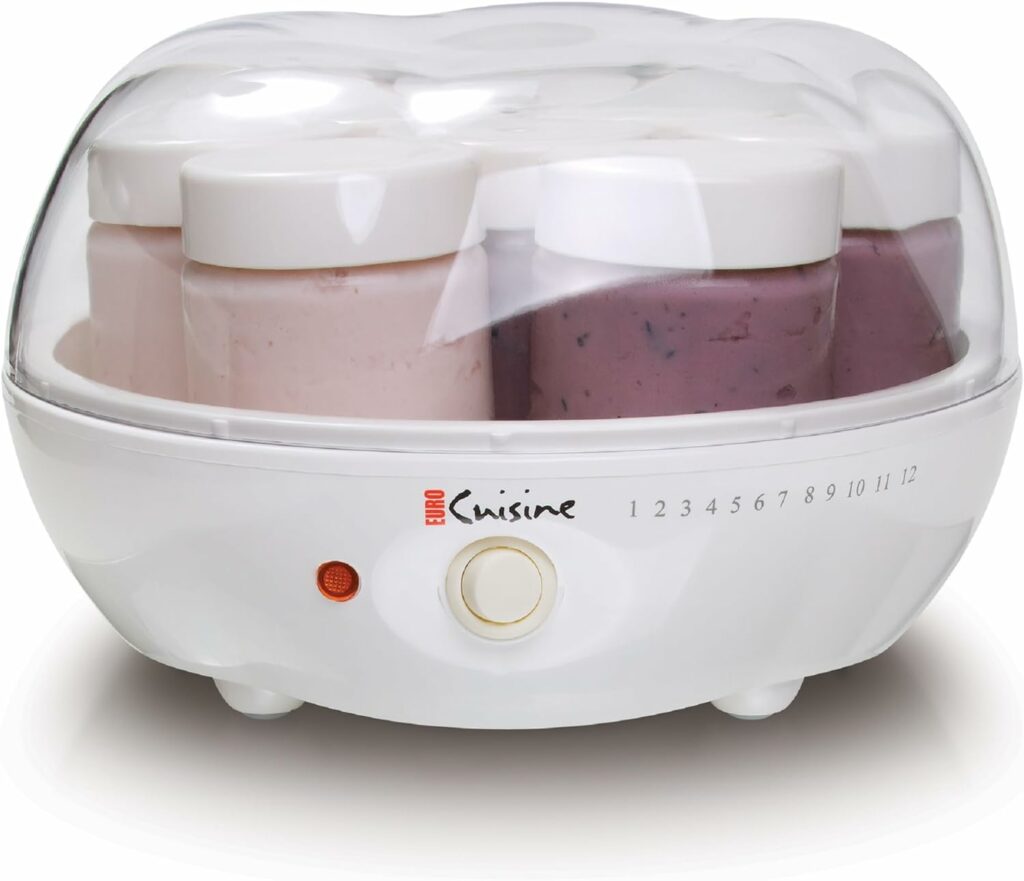
If you’re seeking a simple path to gut-healthy, creamy vegan yogurt at home, this is your go-to gadget.
Pros
- Incredibly straightforward operation
- Offers individual servings with seven glass jars
- Dishwasher-safe components simplify cleanup
Cons
- Limited capacity per batch
- No auto shut-off feature
- Not suitable for all international voltages
I just whipped up a batch of velvety smooth vegan yogurt using this nifty little machine. It’s quite the cost-cutter, allowing me to churn out batches of preservative-free yogurt that satisfies my cravings and supports my gut health. Every time I peek through the transparent lid, I get a little thrill watching my probiotic creation take shape.
The clarity of its design impressed me. With an unambiguous on/off switch and a time reminder, it felt like I had a personal yogurt assistant guiding me. No need for a deep dive into complex controls or settings – it’s wonderfully hassle-free.
I adore how this machine promotes creativity. It’s not just about making standard yogurt; I had the freedom to explore different textures and flavors. The straining process for a thicker Greek-style yogurt was uncomplicated. Plus, cleaning up was a breeze since I could just pop the jars in the dishwasher. However, I admit that the capacity sometimes leaves me wanting more, and I do wish it auto shut-off for those times I get sidetracked.
All in all, the convenience of crafting batches tailored to my vegan diet, coupled with the ease of use, outweighs the few quirks. It’s a reliable sidekick for my kitchen adventures in vegan yogurt making.
Belle+Beauty YoMagic
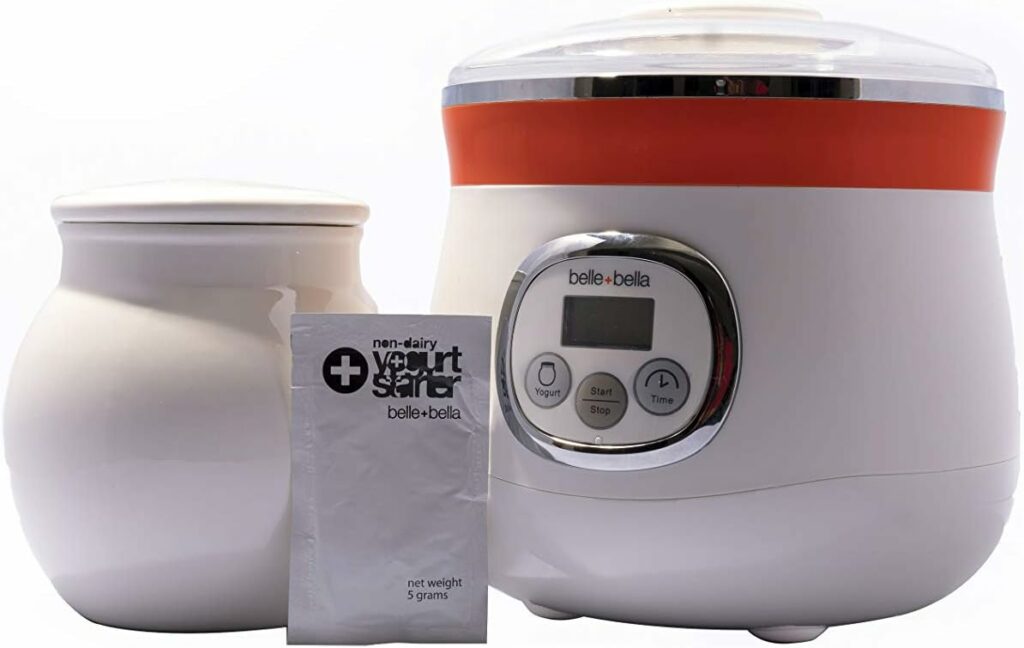
I’d say grab this yogurt maker if you’re into crafting your own vegan yogurt flavors, keeping it eco-friendly, and controlling your ingredients.
Pros
- Eco-conscious by reducing plastic waste
- Versatile for different plant-based milks
- Comes with a digital timer and a durable ceramic jar
Cons
- Some users reported difficulties with the ceramic jar lid
- A few instances of damaged packaging
- Limited customer reviews to gauge widespread satisfaction
Making yogurt at home feels like a mini science project, and the Belle+Beauty YoMagic does not disappoint. When I first got it, I was eager to minimize my plastic footprint. I’ve since churned out several batches of creamy, tangy almond milk yogurt, and the DIY process is simple—just combine your choice of plant milk with the yogurt starter, set the timer, and voila!
The digital timer is Godsent. Forgetting when your batch is ready is no longer an issue, and the 1-quart ceramic jar is a breeze to clean—which is a top priority for me. I’ve gifted homemade yogurt to friends, and they always rave about the flavor. It’s cost-effective, too; my plant-based yogurt now costs a fraction of the store prices.
Now, while I adore what I concoct with this machine, the lid to the ceramic jar doesn’t screw on. It’s a minor hiccup, but worth knowing. Also, after chatting with a couple of folks online, there have been mentions of packaging woes—scratches, and missing yogurt starter, which suggests inconsistency in quality control.
In essence, if you’re all about homemade vegan yogurt and caring for the environment, this gadget is a delightful kitchen addition. Just ensure to inspect it thoroughly upon arrival. Crafting delectable yogurt with this eco-chic machine while watching your favorite series is definitely my kind of chill evening.
Cultures for Health Vegan Yogurt Kit
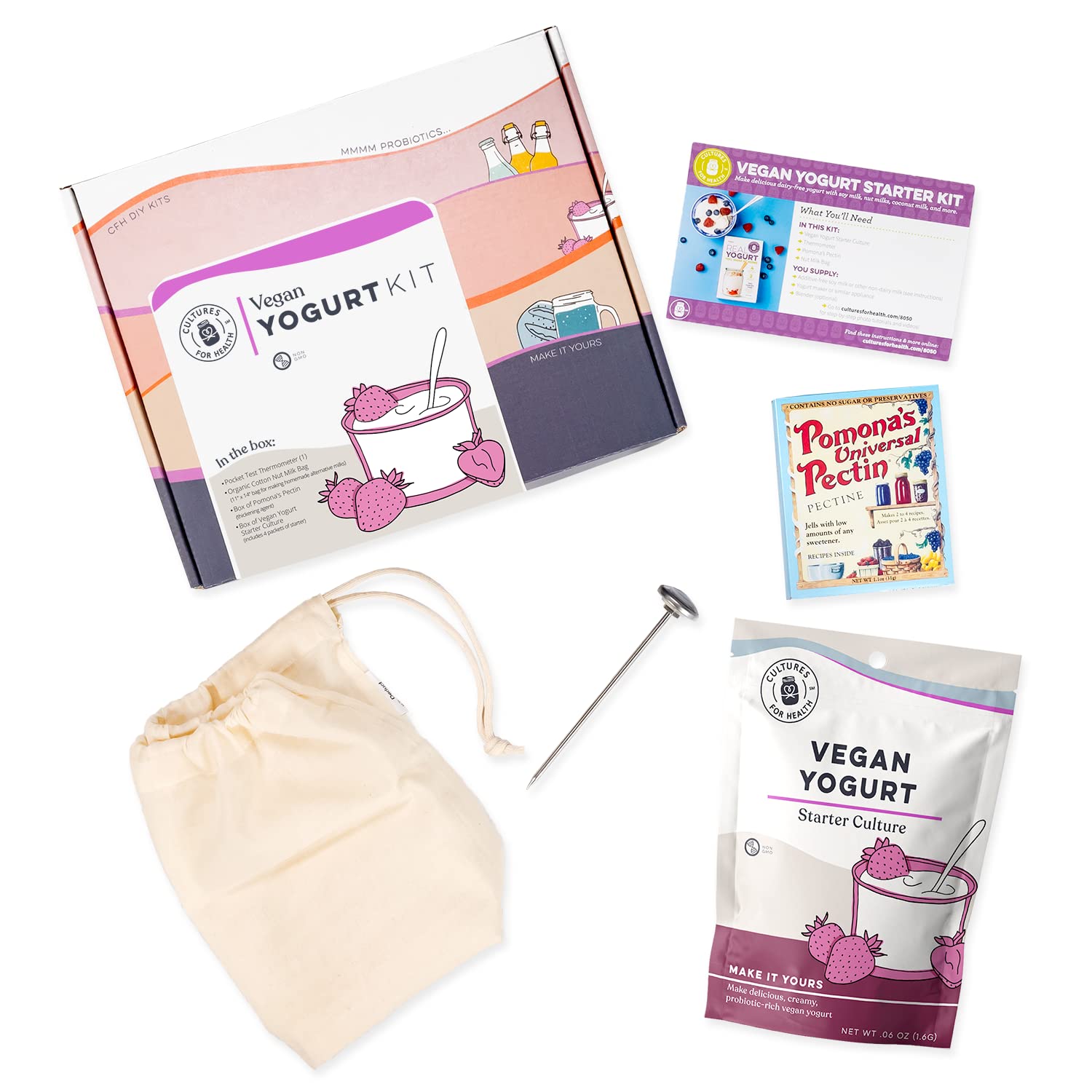
If you’re venturing into the world of homemade vegan yogurt, this starter kit is a comprehensive and convenient option.
Pros
- Includes all necessary components to start making yogurt immediately
- Enables a cost-effective way to create vegan yogurt at home
- Simple-to-follow instructions ideal for beginners
Cons
- Some users report needing additional equipment like a yogurt maker
- A few incidents of packaging arriving damaged
- Limited to a 3.6 rating suggests varied user satisfaction
Making my own yogurt has always sounded like a complex science experiment, but the Cultures for Health Vegan Yogurt Starter Kit turned it into a breezy afternoon activity. This all-in-one package saved me from the hassle of hunting down each component separately.
The kit came with four packets of dairy-free yogurt culture, a box of Pomona’s Pectin for thickening, a handy thermometer, and even a cotton nut milk bag for straining. The simplicity of the process impressed me—I just needed to mix the cultures with my choice of plant-based milk and let it ferment.
The pectin was a game-changer; it gave a pleasantly thick texture to my almond milk yogurt that I often find lacking in store-bought versions. The thermometer helped me monitor the fermentation process, ensuring that I maintained the perfect temperature for the cultures to do their magic. Plus, the nut milk bag was a quality addition, doubling up for both straining the yogurt and making plant-based milk.
Despite the kit’s convenience, I found myself wishing my kitchen was better equipped. While I improvised using a warm spot in my house for incubation, the results might be more consistent with a proper yogurt maker.
Plus, the 3.6 rating hinted that not everyone had the smooth experience I did; it’s worth considering that this kit might not be foolproof for every aspiring yogurteer. Finally, when recommending this to a friend, they mentioned their kit arrived with the box crushed, which is a bit of a letdown for gifting.
TopTherm Gut-Friendly Yogurt Culture
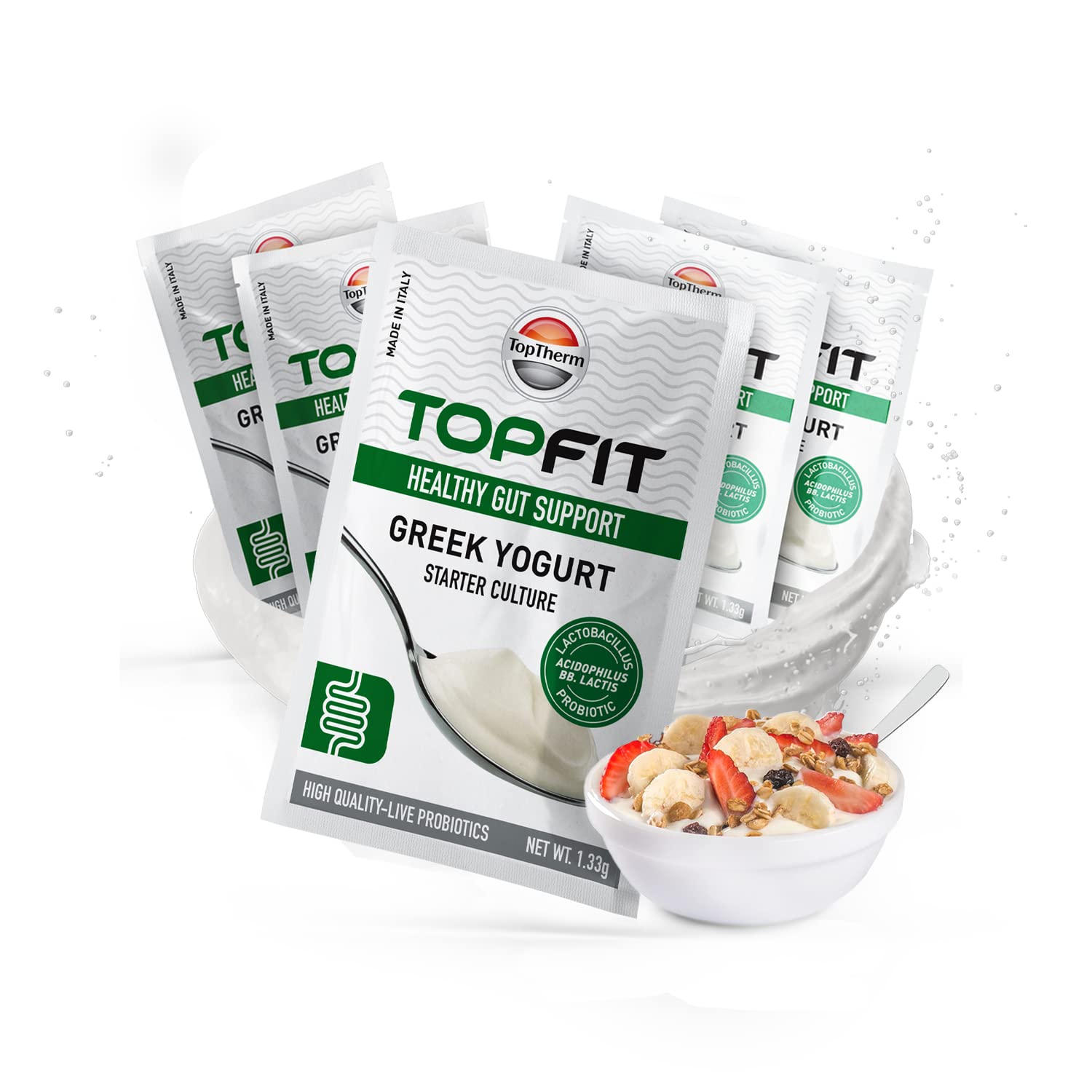
I believe this product is a great choice for anyone looking to make their own dairy-free yogurt at home due to its ease of use and health benefits.
Pros
- Simplifies the yogurt-making process
- Supports gut health with potent probiotics
- Versatile for different yogurt types and milk alternatives
Cons
- Requires precise temperature control
- Inconsistent results for some users
- Longer fermentation time may be needed
I just had the chance to use the TopTherm Yogurt Culture, and it genuinely made the process of creating vegan yogurt a breeze. The instructions were straightforward, and I enjoyed having control over what goes into my yogurt—knowing it’s free from additives and tailored to my preference for thickness and tanginess. The richness of the homemade product was undoubtedly fresher and more flavorful than store-bought options.
However, my experience wasn’t without a little trial and error. Temperature management was critical to ensure proper fermentation, and I had to make sure to maintain the right environment for the cultures to thrive. On the first try, I ended up with a batch that was a bit runnier than I intended, but experimentation led to perfecting the process.
If you’re passionate about vegan eating and want to put your hand into making your own probiotic-rich yogurt, the TopTherm Yogurt Culture could be a game-changer in your kitchen. The sense of satisfaction from enjoying yogurt you’ve made from scratch, exactly to your liking, can’t be overstated. Just remember, it may require a bit of patience to get it just right.
VIVO Vegan Yogurt Starter
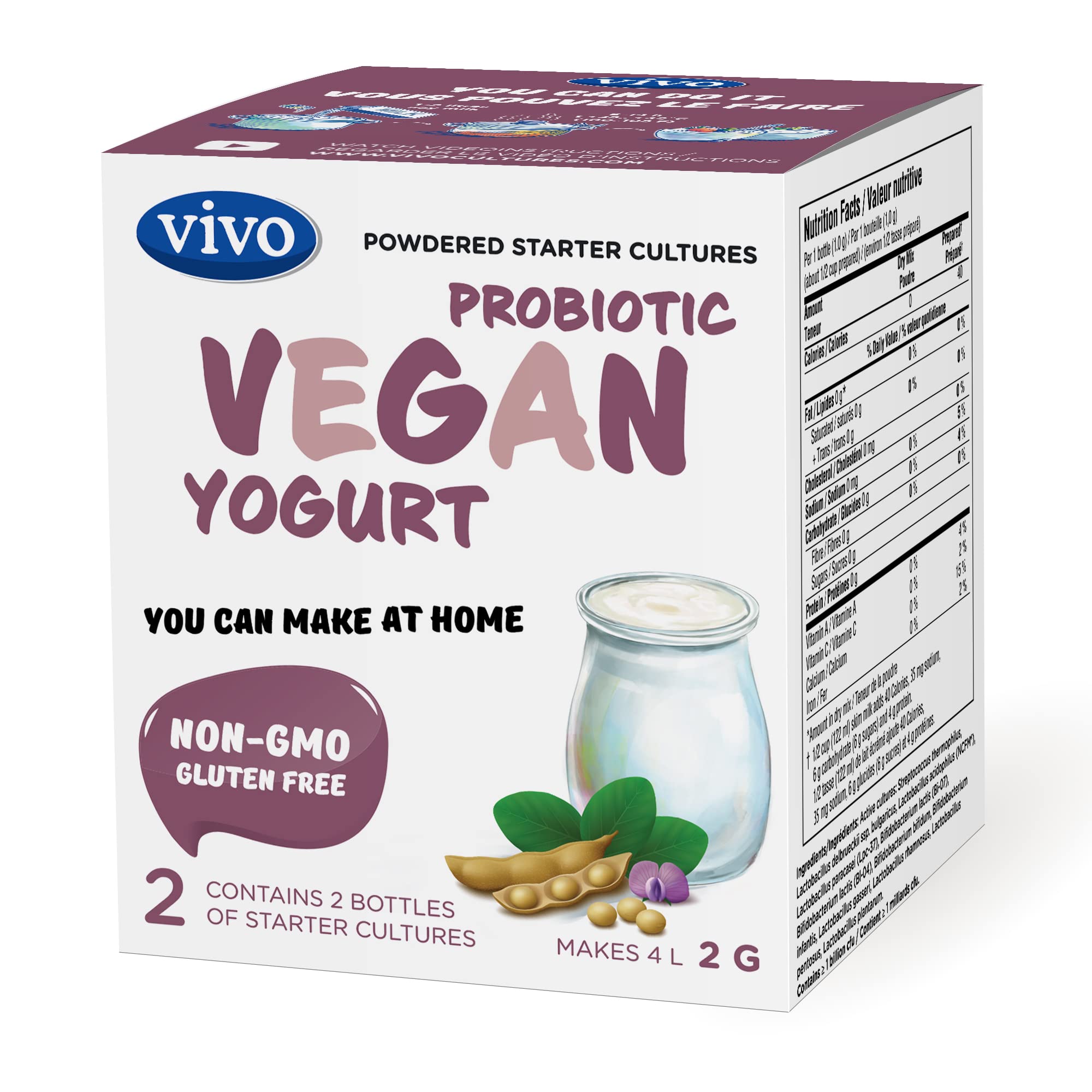
I found that this VIVO Vegan Yogurt Starter is a solid choice if you’re aiming for a vegan yogurt with a diverse probiotic profile.
Pros
- Cultures vegan yogurt with consistency
- Rich in varieties of probiotics
- Straightforward and quick preparation process
Cons
- The packaging may be seen as excessive
- The consistency of yogurt might vary
- Short shelf life of the product
Making my own vegan yogurt at home has always been an adventure, and the VIVO Vegan Yogurt Starter makes the process quite delightful. With a simple mix into my favorite plant-based milk, I had my vegan yogurt base ready in under 10 minutes. The waiting game wasn’t too long either, only taking about 8 hours to ferment.
I appreciate the variety of 12 different probiotics included in this starter. It’s not just about making any yogurt; it’s about making one that’s beneficial for my gut health, and VIVO doesn’t skimp on the good stuff. Every spoonful felt like a contribution to my well-being.
The user-friendliness of this product must be underscored. There’s no need for specialized equipment – my regular kitchen gear did the job perfectly. However, I did find the packaging to be a bit much, considering my environmental consciousness. Also, achieving the perfect consistency took a bit more trial and error than expected.
In spite of the cons, as someone who values probiotic diversity and ease of use, I’d say give VIVO Vegan Yogurt Starter a try. Just keep in mind to use your batch quickly or share with friends, as the expiration date comes sooner than you’d think.
READ NEXT: Best Bread Cloches for Perfectly Crusty Loaves
Buying Guide
When I’m in the market for a vegan yogurt maker, there are several features I consider to ensure I get the best value. I’ve outlined them below to help you in your search.
Capacity
First, I think about how much yogurt I want to make. Capacity is key because it determines how much yogurt I can produce in one cycle. Here’s a breakdown:
| Serving Size | Ideal for |
|---|---|
| Small | Individual use |
| Medium | Small families |
| Large | Meal prepping or large families |
Temperature Settings
For optimal yogurt fermentation, temperature control is critical. Look for a yogurt maker that offers:
- Adjustable temperature settings: to cater to different yogurt recipes and vegan cultures.
- Timer: to set specific fermentation times for consistent results.
Materials and Durability
I also pay close attention to the materials used in the vegan yogurt maker:
- BPA-free plastic or Stainless steel containers: for health and durability.
- Glass jars: I prefer a plastic-free option.
Ease of Use
Making yogurt should be easy, right? Features that enhance usability include:
- Automatic shutoff: I don’t have to watch the clock.
- Digital displays: to easily set and monitor the process.
- A clear lid: lets me peek at the progress.
Cleaning
Lastly, I always check for:
- Dishwasher-safe components: saves time on cleaning.
- Detachable parts: simplifies the process even further.
This quick guide should help you identify the perfect vegan yogurt maker that suits your lifestyle. Happy fermenting!
Looking to naturally sweeten your yogurt creations? Check out our list of the best vegan maple syrup brands next!
